Have a complaint? Click Here.




Why We Hire Transitioning Marines: Inside Semper Fi’s SkillBridge Program


More than 19,676+ 5-Star reviews
Leaving active-duty military service means more than changing jobs. It often means translating years of experience, responsibility, teamwork, and technical problem-solving into an entirely new industry. At Semper Fi Heating & Cooling, we believe the HVAC trade gives transitioning service members an opportunity to put many of those skills to work while building a civilian career.
In this guide, we explain why Semper Fi hires transitioning Marines, how our SkillBridge program introduces participants to residential HVAC installation and service, and what service members can expect from the experience. Our goal is not simply to provide short-term training. It is to give participants meaningful exposure to a skilled trade before they make their next career decision.
Why Does Semper Fi Hire Transitioning Marines?
Marines often leave active duty with experience that can translate well into the HVAC industry. The equipment may be different, but the ability to follow procedures, troubleshoot problems, work as part of a team, adapt to changing conditions, and take responsibility for the result has direct value in the skilled trades.
HVAC technicians need more than mechanical ability. Successful residential service requires people who can:
- Learn technical systems and procedures
- Work safely around electrical and mechanical equipment
- Troubleshoot problems systematically
- Communicate clearly with teammates and customers
- Adapt when the situation changes
- Manage tools and equipment responsibly
- Complete work to a defined standard
- Stay focused when conditions are demanding
- Take ownership of assigned responsibilities
Military experience does not automatically make someone an HVAC technician. Technical HVAC skills still need to be learned. SkillBridge creates an opportunity to begin that learning while a service member is preparing to transition into civilian life.
What Is the SkillBridge Program?
The Department of Defense SkillBridge program connects eligible service members nearing separation with civilian industry training, apprenticeships, internships, and other approved employment experiences.
Semper Fi participates by providing transitioning active-duty service members with hands-on exposure to residential HVAC work in the Phoenix Valley. According to Semper Fi’s current program information, the HVAC service and installation track requires a minimum eight-week enrollment.
Participation is not automatic. Marines must follow current Marine Corps SkillBridge procedures and obtain the appropriate approval through their chain of command. The Marine Corps maintains current SkillBridge guidance through NAVMC 1700.2B, which establishes procedures for the employment training program.
Service members interested in participating should begin planning early. Eligibility, timing, command approval, transition requirements, and available opportunities should all be confirmed before making arrangements.
What Marine Corps Skills Translate to HVAC Work?
One reason we see value in transitioning Marines is that HVAC service depends heavily on habits developed during military service.
Consider troubleshooting. An HVAC technician may arrive at a home where the air conditioner is running but not cooling. The technician cannot simply replace parts until something works. The job requires gathering information, testing the system, narrowing down possible causes, and identifying the actual failure.
That systematic approach to problem solving can feel familiar to someone accustomed to working through technical or operational problems.
Teamwork is another example. HVAC installation crews have different responsibilities, but everyone is working toward the same result. Equipment must be removed, new components positioned, electrical and refrigerant connections completed, controls configured, and the finished system tested.
Communication matters as well. A residential technician must be able to explain what was found without overwhelming the homeowner with technical language. Customers need to understand the problem, the recommended solution, and what happens next.
The military does not train every Marine for residential HVAC work. What it can provide is a foundation of experiences that may make learning a skilled trade feel like a natural next step.
What Do Participants Learn at Semper Fi?
Semper Fi’s SkillBridge HVAC track is designed to expose participants to both installation and service rather than limiting the experience to one part of the trade.
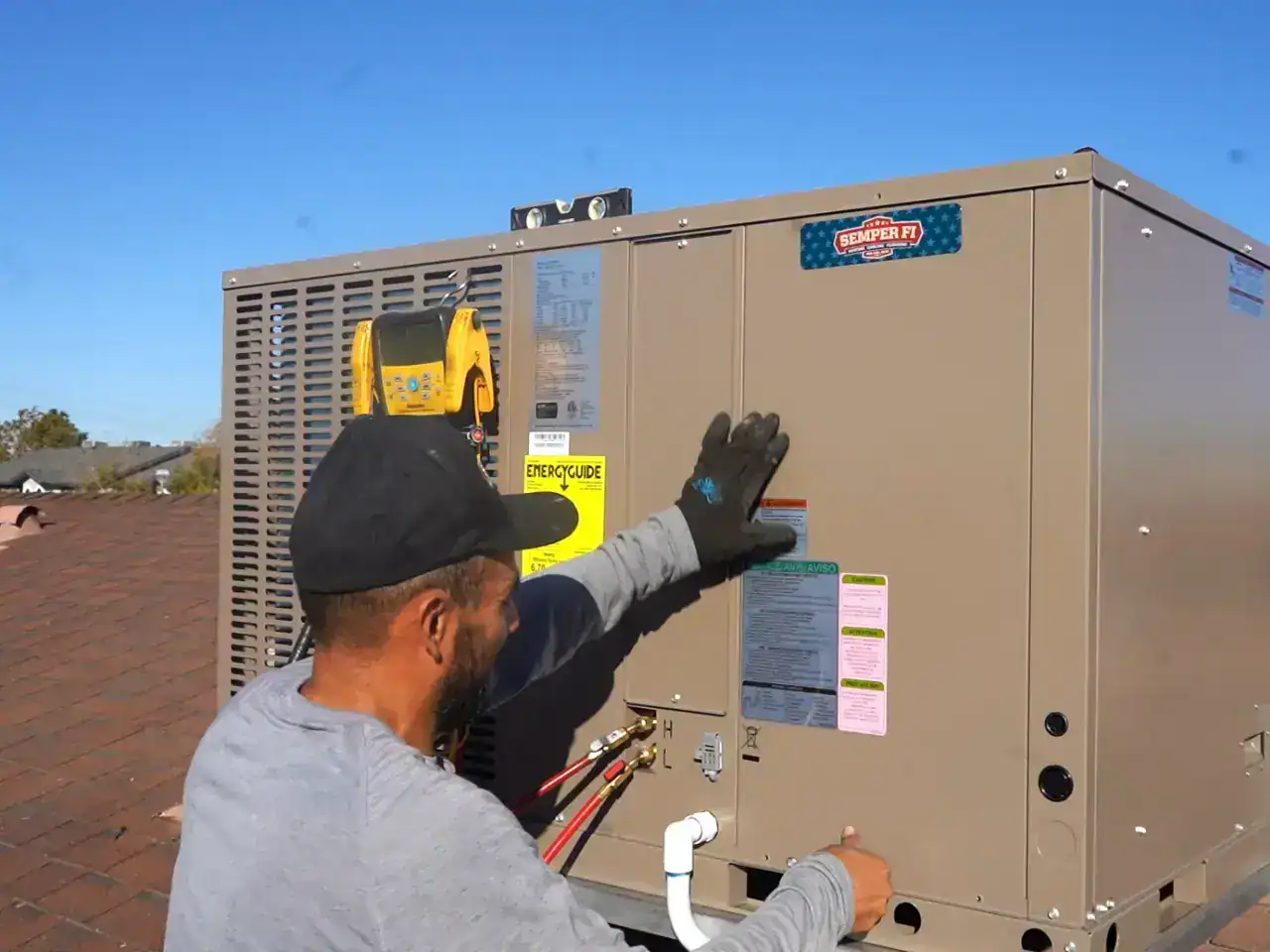
The company’s published program begins participants in the installation department. They learn about removing and replacing residential heating and cooling equipment before progressing into service work. The service portion introduces troubleshooting, diagnosis, and HVAC repair.
That progression gives participants exposure to how systems are assembled before they are asked to understand why those systems stop working.
During the experience, participants may become familiar with areas such as:
- Residential heating and cooling equipment
- HVAC tools and jobsite procedures
- Equipment removal and replacement
- System components and connections
- Installation workflow
- Basic troubleshooting
- Diagnostic thinking
- Service procedures
- Repair processes
- Residential customer interactions
The goal is not to turn eight weeks into years of field experience. It is to provide a foundation and help participants determine whether HVAC installation, service, or another path within the industry fits their interests.
Why Does the Program Start With HVAC Installation?
Installation provides an important foundation because it lets participants see how a complete residential HVAC system fits together.
Before diagnosing a system, it helps to understand what normal installation should look like. Participants can begin learning where components are located, how equipment connects, how technicians organize a jobsite, and why installation details affect future system operation.
Installation also reinforces teamwork. Replacing residential heating and cooling equipment requires coordination among crew members, attention to procedure, and responsibility for each part of the job.
This experience can make later service training more meaningful. Instead of encountering a component for the first time during a repair call, the participant has already seen how it fits into the larger system.
Semper Fi specifically structures its minimum eight-week program so participants begin with installation fundamentals and then move into the service department.
How Does SkillBridge Prepare Marines for HVAC Service Work?
Service work shifts the focus from building or replacing a system to understanding how an existing system is performing.
A customer may report that the home is warm, airflow feels weak, equipment is making noise, or the system will not start. Those symptoms are only the beginning of the diagnosis.
Technicians need to determine what is actually happening.
That process can involve:
- Listening to the customer’s description
- Inspecting equipment condition
- Testing system operation
- Checking individual components
- Comparing symptoms with test results
- Identifying the cause of the failure
- Explaining the findings
- Completing or recommending the appropriate repair
Semper Fi’s SkillBridge program specifically identifies troubleshooting, diagnosing, and repairing HVAC equipment as part of the service portion of the experience.
The transition from installation to service gives participants a broader view of the trade. It also allows them to consider which kind of work they may want to pursue after the program.
What Certifications Do Participants Need?
Semper Fi currently requires participants in its HVAC SkillBridge track to obtain EPA certification by the end of the minimum eight-week program. The company states that participants can pursue that certification through a local HVAC supplier.
EPA Section 608 certification is particularly relevant in HVAC because technicians who maintain, service, repair, or dispose of equipment in ways that could release regulated refrigerants must meet federal technician certification requirements.
The certification requirement also illustrates an important part of entering the skilled trades. Learning continues beyond the initial SkillBridge experience.
HVAC professionals may spend their careers learning about:
- New refrigerants
- Electrical controls
- Variable-speed equipment
- Heat pumps
- Smart thermostats
- Airflow
- Indoor air quality
- Diagnostic technology
- Updated codes and industry practices
A military transition may be the beginning of the learning process rather than the end of it.
Why Can the Skilled Trades Be a Strong Post-Service Career?
For someone who enjoys hands-on technical work, HVAC can provide a civilian career where each day presents a different challenge.
A technician might diagnose an electrical failure in the morning, address an airflow problem in the afternoon, and help install new equipment on another day. The work combines mechanical systems, electrical components, refrigeration, controls, and customer service.
There are also multiple directions a person can pursue as experience grows.
Potential paths can include:
- Residential installation
- Residential service
- Maintenance
- System diagnostics
- Indoor air quality
- Field leadership
- Training
- Operations
- Management
Semper Fi’s own SkillBridge structure reflects this idea of exploring different paths. At the end of the program, participants can consider which department they would prefer if continuing with the company is the right fit.
SkillBridge does not guarantee employment. It provides real-world exposure that can help both the service member and the participating employer evaluate whether there is a strong match.
How Does Semper Fi’s Military Background Shape the Program?
Semper Fi Heating & Cooling is a veteran-owned company, and supporting veterans remains central to the company’s identity. Its current website includes veteran-focused community initiatives and a dedicated SkillBridge pathway for transitioning service members.
That background gives the company a useful perspective on what transition can involve. Military experience may be valuable, but entering a civilian technical trade still requires training, patience, and a willingness to start learning a new craft.
The SkillBridge program creates a structured bridge between those two environments.
Participants do not have to arrive as experienced HVAC technicians. They arrive ready to learn how their existing strengths can be applied in a different setting.
What Should Marines Know Before Applying for SkillBridge?
Interested Marines should start the process before their planned transition date and verify the current requirements that apply to their individual situation.
Important steps include:
- Review current Marine Corps SkillBridge guidance
- Complete required transition activities
- Speak with the appropriate installation SkillBridge representative
- Confirm eligibility
- Discuss participation with the chain of command
- Obtain required command approval
- Review Semper Fi’s current program availability
- Prepare a civilian resume
- Translate military responsibilities into applicable civilian skills
- Ask questions about installation and service career paths
The Marine Corps’ current SkillBridge policy is contained in NAVMC 1700.2B, dated April 4, 2025. Because participation depends on current policy and command approval, applicants should rely on their official transition resources for eligibility and authorization rather than assuming that every service member can participate for the same length of time.
Semper Fi currently lists its HVAC SkillBridge opportunities in the Phoenix Valley and requires active-duty status for applicants to its program.
Take the Next Step From Military Service to an HVAC Career
Transitioning out of the Marine Corps does not mean leaving behind the skills developed during military service. Accountability, teamwork, adaptability, communication, and methodical problem-solving can all provide a valuable foundation for learning HVAC installation and service.
Semper Fi’s SkillBridge program gives transitioning active-duty service members the opportunity to experience the trade directly. Participants begin with residential installation, move into troubleshooting and service, and gain a clearer understanding of where an HVAC career could take them.
If you are preparing to transition from active duty and want to explore a hands-on career in HVAC, review your SkillBridge eligibility and current command requirements first. Then contact us today to learn more about Semper Fi Heating & Cooling’s SkillBridge program and current opportunities.


Contact Us Today for a Free Estimate or a $17.75 Tune-Up
Semper Fi Heating & Cooling provides 24/7 heating, cooling, plumbing, and home comfort services backed by quality workmanship and a veteran-run commitment to exceptional service. Call or schedule your service today!