Have a complaint? Click Here.





Water Softeners in the Valley: Are They Worth It With Phoenix’s Water Hardness Levels?


More than 19,676+ 5-Star reviews
White buildup around a faucet, cloudy spots on glassware, and scale around a showerhead can quickly become familiar sights in a Phoenix home. The reason is often hard water.
Phoenix’s water contains naturally occurring minerals, particularly calcium and magnesium. While hard water isn’t a drinking-water safety issue, those minerals can leave deposits throughout a home and affect everything from plumbing fixtures to water heaters.
That raises a practical question for Valley homeowners: Is a water softener actually worth installing?
In this guide, we’ll look at how hard Phoenix’s water is, what those minerals can do inside your home, how water softeners work, and the factors to consider when deciding whether a whole-home water softener makes sense for you.
How Hard Is the Water in Phoenix?
Phoenix has hard water. According to the City of Phoenix’s 2025 Water Quality Report, total hardness measurements ranged from 172 to 302 parts per million (ppm), which the city also reports as approximately 10 to 17.6 grains per gallon.
That range helps explain why mineral buildup is such a noticeable issue for many Valley homeowners.
Water hardness can vary by water source and location, so your home’s exact hardness level may differ. Testing your water provides the best information for selecting and sizing water treatment equipment.
It is also important to distinguish hardness from water safety. The City of Phoenix identifies hardness as an aesthetic water characteristic rather than a regulated drinking water health standard. Installing a water softener generally addresses the effects of hardness inside the home, not making municipal water safe to drink.
Why Does Phoenix Have Hard Water?
Water becomes hard as it picks up dissolved minerals, particularly calcium and magnesium.
As water travels through natural environments and contacts mineral-containing soils and other materials, some of those minerals dissolve into the water. The City of Phoenix specifically identifies calcium and magnesium picked up through contact with soils along the water’s journey to treatment facilities as contributors to local hardness.
Once that water enters your home, those minerals come with it.
Heating or evaporating water can make mineral deposits particularly noticeable. This is why homeowners often see white or chalky buildup in places such as:
- Faucets
- Showerheads
- Sink fixtures
- Glass shower doors
- Water heater components
- Other surfaces frequently exposed to water
A water softener addresses this mineral content before hard water reaches much of the home’s plumbing system.
What Are the Signs of Hard Water in Your Home?
Hard water usually doesn’t announce itself with a sudden plumbing failure. Its effects tend to appear gradually.
Common signs include:
- White or chalky scale around faucets
- Mineral buildup on showerheads
- Spots or film on dishes and glassware
- Residue on sinks, tubs, or shower surfaces
- Soap that does not lather as easily as expected
- Mineral deposits around water-using fixtures
- Repeated scale accumulation after cleaning
- Buildup associated with water-heating equipment
Some homeowners primarily view these as cleaning annoyances. Others become more concerned about what the same minerals may be doing in plumbing fixtures and water-using equipment.
If you constantly remove scale only to have it return, treating the water itself may be more practical than repeatedly treating visible deposits.
Can Hard Water Affect Plumbing and Appliances?
Yes. Hard water minerals can create scale, and that scale can accumulate on surfaces that regularly contact water.
The City of Phoenix specifically notes that hard water can cause certain types of scaling in pipes and water heaters as well as on faucets and showerheads.
Potential areas affected by mineral buildup include:
- Plumbing fixtures
- Faucet aerators
- Showerheads
- Water heaters
- Dishwashers
- Other water-using equipment
The exact impact depends on factors such as water hardness, equipment design, temperature, water usage, and maintenance.
Hot water deserves particular attention because heating hard water can contribute to mineral deposits. Over time, sediment and scale may collect inside water-heating equipment.
That does not mean every plumbing or appliance problem in Phoenix is caused by hard water. However, when scale is clearly visible throughout a home, reducing hardness can help address the source of that recurring mineral buildup.
How Does a Water Softener Work?
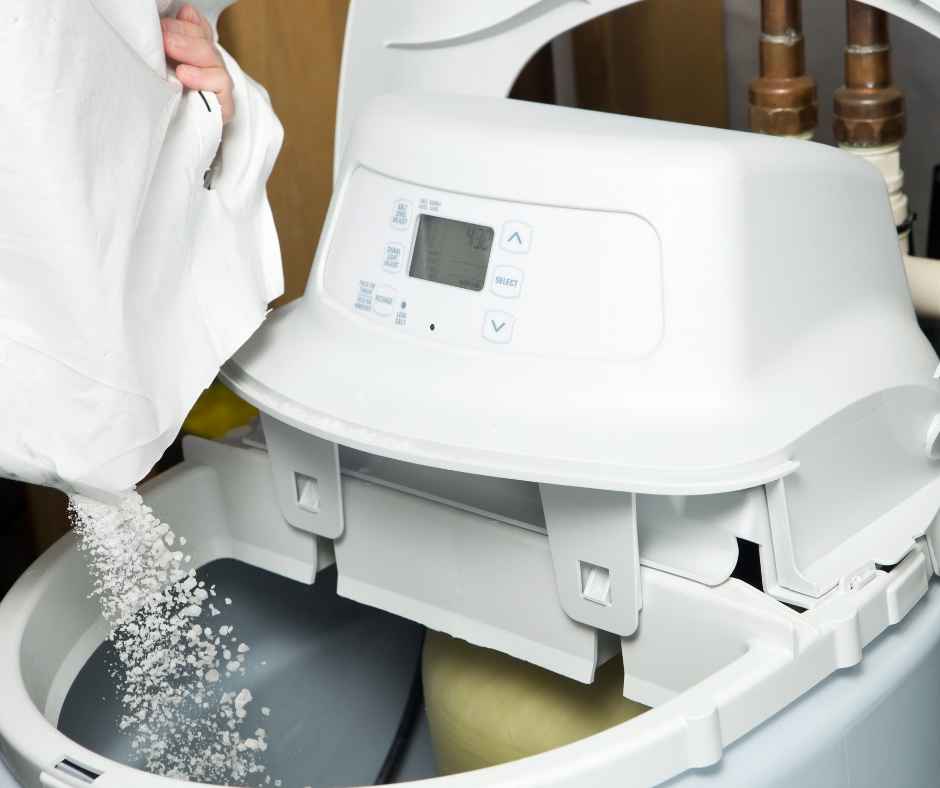
A traditional whole-home water softener typically uses a process called ion exchange.
Inside the system, a resin attracts hardness minerals such as calcium and magnesium. As hard water moves through the softener, those minerals are exchanged for other ions, commonly sodium or potassium depending on the system.
The softened water then continues into the home’s plumbing.
Over time, the resin needs to be regenerated so it can continue removing hardness minerals. Conventional systems typically use a brine solution during this process.
This is why water softeners generally require ongoing maintenance. Depending on the equipment, homeowners may need to:
- Monitor salt or potassium levels
- Refill the brine tank
- Follow recommended maintenance procedures
- Have the equipment serviced when necessary
Correct sizing is also important. Select a system based on actual water conditions and household demand rather than choosing the largest available model.
Is a Water Softener Worth It in Phoenix?
For many Phoenix homeowners who are bothered by significant hard-water effects, a water softener can be worthwhile. Whether it is worthwhile for your particular home depends on how much the hardness affects your household and what you want a treatment system to accomplish.
A water softener may be worth considering if:
- Scale repeatedly builds up on faucets and showerheads.
- You frequently deal with spots and mineral residue.
- Hard-water buildup makes bathrooms and kitchens harder to clean.
- You want to reduce scale throughout the home’s plumbing system.
- Mineral accumulation around water-using equipment is a concern.
- You are already spending significant time managing hard-water deposits.
- You want the feel and cleaning characteristics associated with softened water.
No Phoenix home is required to have a softener. Phoenix municipal water is treated and monitored to drinking-water standards, regardless of whether you install additional home treatment.
The decision is primarily about comfort, cleaning, scale management, equipment protection, and personal preference.
What Are the Benefits of a Water Softener in a Phoenix Home?
The biggest benefit is straightforward: a true water softener reduces the hardness minerals responsible for scale.
That can provide several practical advantages.
Less Scale on Fixtures
Reducing calcium and magnesium can mean less mineral buildup around faucets, showerheads, sinks, and other water-exposed surfaces.
Easier Cleaning
If you regularly scrub mineral residue from fixtures and shower surfaces, softened water may reduce the amount of hard-water scale you need to manage.
Better Soap Performance
Hardness minerals interact with soap. With softened water, homeowners may notice that soaps and detergents behave differently and lather more readily.
Reduced Mineral Accumulation
Because the water is treated before reaching many fixtures and appliances, a whole-home softener addresses hardness throughout the plumbing system rather than treating scale after it appears.
For Phoenix homeowners dealing with noticeable hard-water deposits, this whole-home approach is one of the primary reasons to consider softening.
Are There Any Downsides to Water Softeners?
Water softeners have advantages, but they also come with costs and maintenance responsibilities.
Before installing one, consider:
- Upfront cost: A whole-home system requires equipment and professional installation.
- Ongoing maintenance: Conventional systems require salt or another appropriate regenerant.
- Water and salt use: Regeneration requires resources to consider when selecting a system.
- Space: The equipment needs an appropriate installation location.
- Added sodium: Conventional sodium-based ion-exchange systems add some sodium to softened water.
- Maintenance requirements: Like other home equipment, a softener needs proper upkeep to continue operating correctly.
The City of Phoenix also advises homeowners who install treatment systems to follow the manufacturer’s operation and maintenance instructions.
Understanding these tradeoffs makes it easier to decide whether the benefits justify the investment for your household.
Water Softener vs. Water Conditioner: What’s the Difference?
Water softeners and water conditioners are often discussed as though they are interchangeable, but they may work very differently.
A traditional ion-exchange water softener removes hardness minerals such as calcium and magnesium through an exchange process.
Products marketed as water conditioners can use different technologies. Some are designed to alter how minerals behave or reduce their tendency to form scale without actually removing the hardness minerals.
That distinction matters.
If your goal is to actually reduce measured water hardness, ask whether the system is a true softener and how it treats calcium and magnesium.
If your primary goal is scale management without conventional softening, a different type of treatment system may be worth discussing.
Start with what you want to accomplish, not equipment based solely on the product name.
How Do You Choose a Water Softener for a Phoenix Home?
Start by understanding your home’s water and household demand.
Important considerations include:
- Measured water hardness
- Number of people in the household
- Typical water consumption
- Number of bathrooms
- Available installation space
- System capacity
- Regeneration requirements
- Maintenance preferences
- Existing plumbing or water-heater concerns
- Your goals for treating the water
Avoid choosing equipment based only on a generic recommendation for Phoenix.
Although citywide water-quality data provides valuable context, your home conditions and household water use should guide system selection.
Professional evaluation can help determine whether a water softener is appropriate and what size and type of equipment fits your needs.
Is a Water Softener the Right Choice for Your Valley Home?
Phoenix’s hard water is more than perception. Local water-quality reporting confirms significant levels of calcium- and magnesium-related hardness, and those minerals can contribute to scale on fixtures, pipes, and water-heating equipment.
Whether that makes a water softener worth the investment depends on your home.
If you’re tired of cleaning scale from fixtures, concerned about mineral buildup, or simply want the benefits of softened water, a whole-home system may be a practical solution. If hard water causes few noticeable problems for your household, installing a softener may be less of a priority.
Semper Fi Heating & Cooling can help you evaluate your home’s water treatment needs and determine whether a water softener is the right fit. If hard water is creating problems throughout your Valley home, contact us today to discuss your options and find a solution that fits your household.



Contact Us Today for a Free Estimate or a $17.75 Tune-Up
Semper Fi Heating & Cooling provides 24/7 heating, cooling, plumbing, and home comfort services backed by quality workmanship and a veteran-run commitment to exceptional service. Call or schedule your service today!